Third Shot Tuesday: How to Survive the Transition Zone (No Man’s Land) [2026]
THIRDSHOTFINDS.COM and The Deal Dinker are reader-supported. When you buy through links on our site, we may earn an affiliate commission at no extra cost to you.
Every pickleball player knows the feeling. You hit your third shot, and you start walking up to the kitchen line. Suddenly, your opponent hits a blistering drive right at your feet while you are caught dead in the middle of the court. You panic, flail your paddle, and pop the ball straight up into the air for an easy smash.
Welcome to the Transition Zone—also known as “No Man’s Land.”
In beginner games, players try to sprint from the baseline to the kitchen in one single panic-fueled run. In advanced 4.0+ games, players understand that moving up to the net is a calculated, step-by-step march. Welcome back to the kitchen line. The Deal Dinker here. Let’s break down how to survive the most difficult area on the court.
1. The Golden Rule: Stop Your Feet (The Split Step)
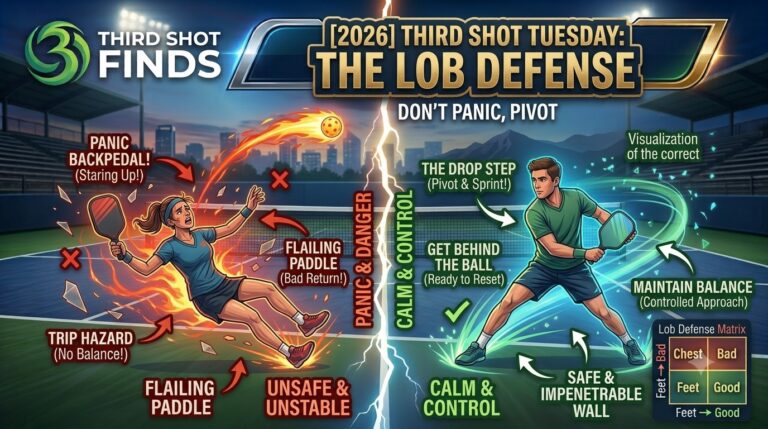
The number one reason players get crushed in the transition zone is that they are actively running when the opponent hits the ball. It is physically impossible to hit a controlled, soft defensive shot while your momentum is carrying you forward.
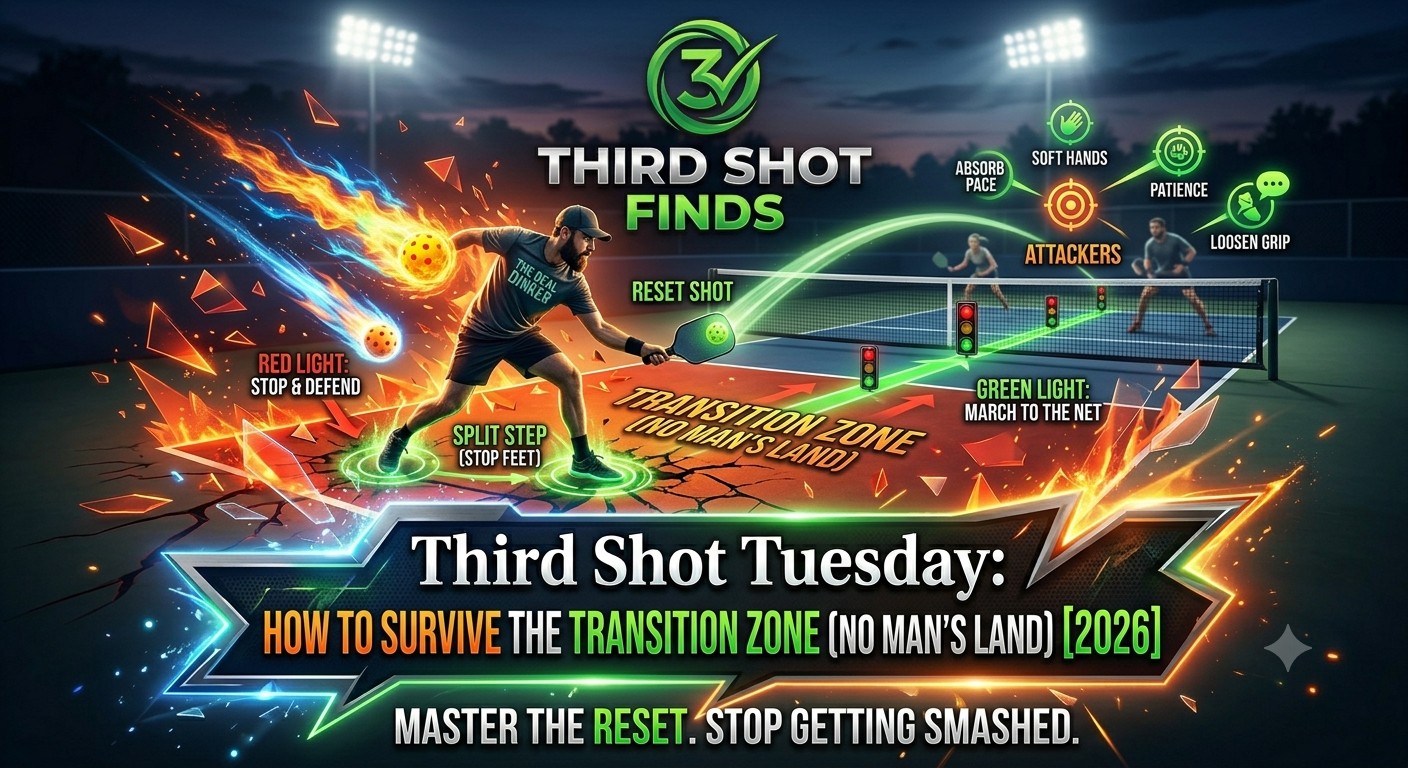
- The Fix: The moment your opponent’s paddle makes contact with the ball, you must stop moving forward. Execute a “split step”—a tiny hop that lands you on the balls of both feet, with your knees bent, in a wide, athletic stance.
- Why it Wins: The split step anchors you to the ground. Even if you are stuck 10 feet behind the kitchen line, being completely stationary gives you the balance needed to dig out a low ball and reset the point.
2. The Reset Shot (Drop Your Ego)
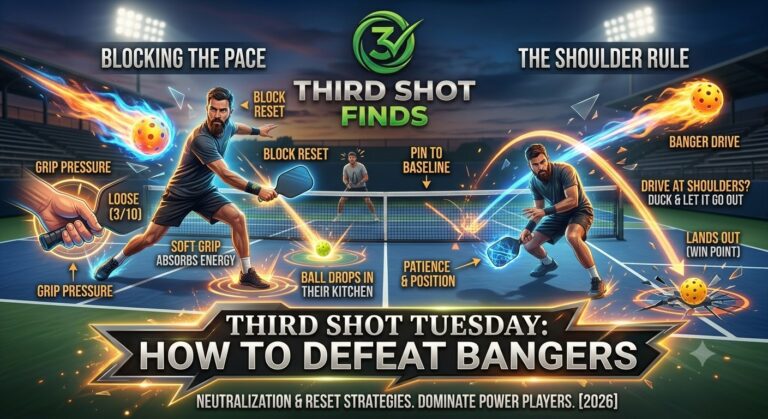
When you are trapped in No Man’s Land and a fast ball is hit at you, your instinct might be to swing hard and fight fire with fire. This is a losing battle. Your opponents are at the net, hitting down on you; you are back, hitting up at them.
- The Strategy: You must execute a “reset shot.” This is a soft, blocking motion designed to absorb the pace of the incoming drive and gently drop the ball into the opponent’s kitchen. Do not swing. Keep your paddle out in front of you, loosen your grip pressure to a 3 out of 10, and let the ball bounce off your paddle face.
3. Playing “Red Light, Green Light”
Surviving the transition zone is exactly like playing the childhood game of Red Light, Green Light.
- Green Light: If you hit a beautiful, soft reset shot that lands harmlessly in the kitchen, your opponents cannot attack it. That is your Green Light. Take two big steps forward.
- Red Light: If your reset shot floats a little too high, your opponent is going to smash it. That is a Red Light. Stop your feet immediately, hold your ground, and prepare to defend another hard drive.
- The March: You might have to hit three or four reset shots from the transition zone before you finally get a “Green Light” good enough to safely reach the kitchen line. Be patient!
The Deal Dinker’s Final Take
Stop sprinting blindly to the net. The transition zone is not lava; it is just a temporary waiting room. Learn to split step, soften your hands to master the reset shot, and only move forward when you have earned a Green Light. If you can defend from No Man’s Land, you will instantly frustrate bangers and elevate your game to the next level.
Frequently Asked Questions: Transition Zone Tactics
Where is the Transition Zone located?
The transition zone (or No Man’s Land) is the area of the court between the baseline and the non-volley zone (kitchen) line. It is the mid-court area where balls tend to bounce right at your feet, making them incredibly difficult to return aggressively.
Where should I hold my paddle in the Transition Zone?
Keep your paddle directly in front of your chest or stomach, pointed slightly downward, and favoring your backhand side. Most attacks in this zone will be aimed at your feet or your non-dominant hip. Holding the paddle in a backhand-ready position protects your body and allows for the fastest reaction time.
Can I use a beginner paddle to hit reset shots?
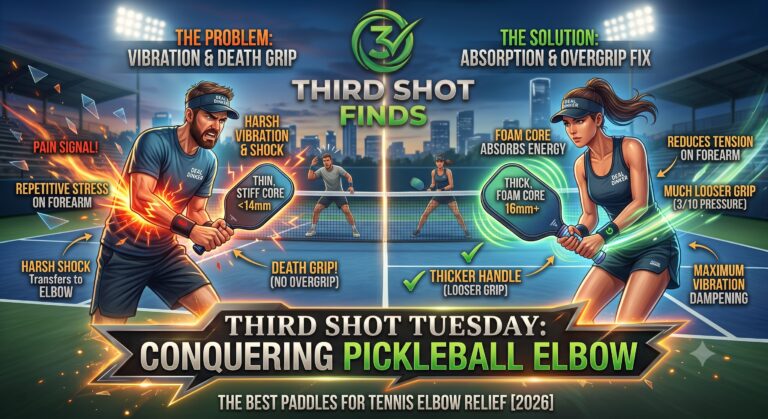
Yes, but it is much harder. Cheap wooden paddles or highly stiff fiberglass paddles tend to cause the ball to “pop” aggressively off the face. If you want to master soft reset shots in the transition zone, upgrading to a raw carbon-fiber control paddle (with a 16mm thick core) will naturally absorb the pace of the ball and make your resets much easier.