Third Shot Tuesday: Targeting the Feet (The Universal Neutralizer) [2026]
THIRDSHOTFINDS.COM and The Deal Dinker are reader-supported. When you buy through links on our site, we may earn an affiliate commission at no extra cost to you.
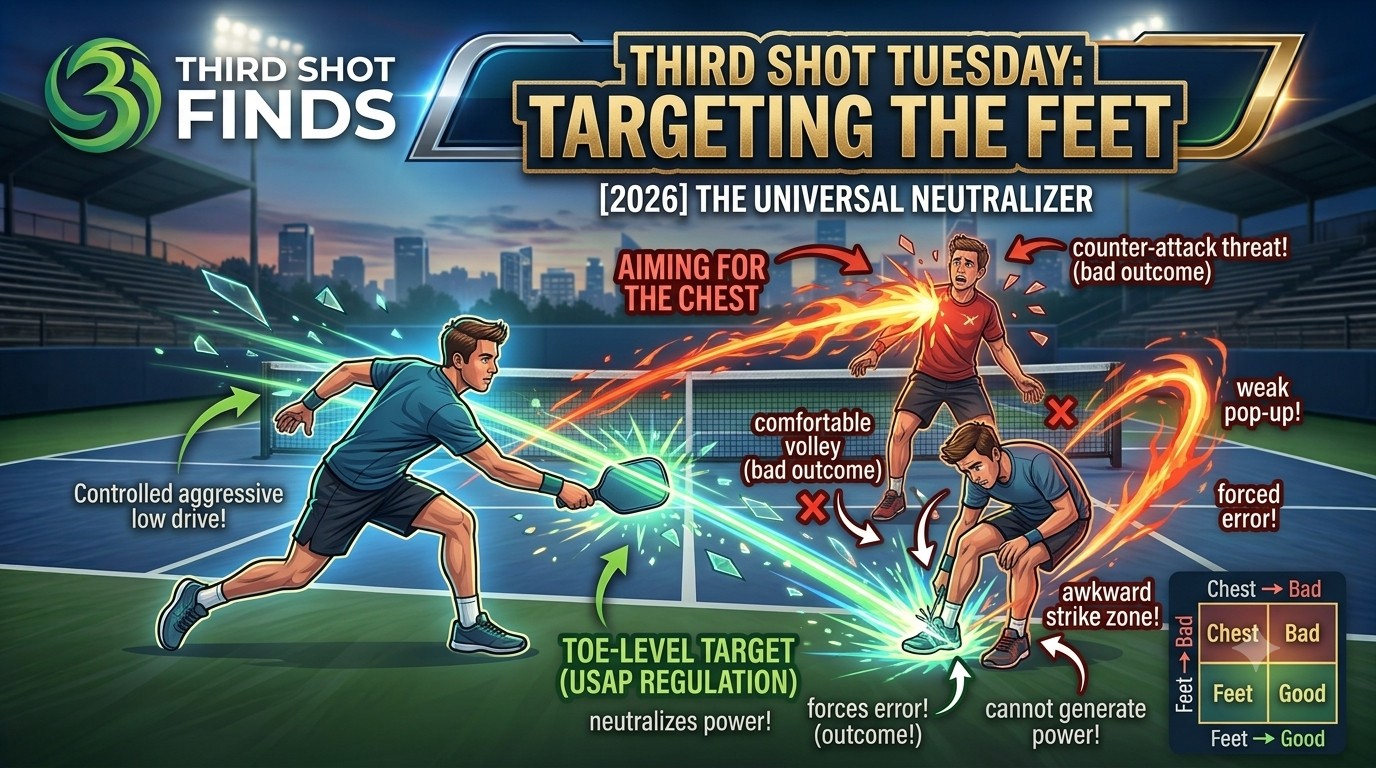
You are at the non-volley zone (NVZ) line, in a fast-paced dinking exchange. You spot an opening and you swing, driving the ball hard… right into your opponent’s paddle, which is held comfortably at chest height. They easily absorb the pace and reset the ball, or worse, counter-attack and win the point.
The mistake wasn’t your speed or intent; it was your target. Aiming for the chest might work against beginners, but against skilled opponents, it is an invitation for trouble. To end points, neutralize bangers, and prevent counters, you must master the simplest yet most effective tactical shift in pickleball: Target the Opponent’s Feet.
Welcome back to the kitchen line for another true Third Shot Tuesday. The Deal Dinker here. Today, we are analyzing the court geometry and anatomical reality of why aiming low is your highest-percentage path to victory.
1. The Biometrics of Why Feet Matter
Pickleball strategy is often defined by the net. When a ball is hit low (below the net line), your opponent must open their paddle face and lift the ball to get it back over.
But when you target the feet, you introduce an anatomical constraint:
- Reduced Strike Zone: To hit a ball that is literally at shoe-lace level, a player must get exceptionally low. If they can’t (or don’t have time to), they are forced to use awkward, high-to-low forearm swings that almost always result in errors or weak pop-ups.
- No Power Generation: It is nearly impossible to generate meaningful power when you are lifting a ball from your shoe-tops. By hitting to their feet, you take the “banger” entirely out of the point.
- Maximum Movement: A chest-high ball allows a player to stand still. A foot shot forces them to adjust. They must retreat (open up their stance), step back, or, in many cases, make an awkward “jammed” reaction because they cannot move their feet quickly enough.
2. The Deal Dinker’s Top Scenarios for the “Toeshot”
This tactic isn’t just for dink rallies. Aiming low should be your default goal in three crucial scenarios:
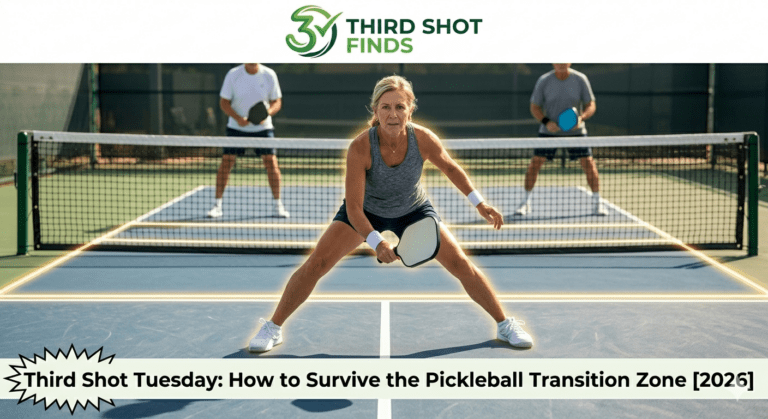
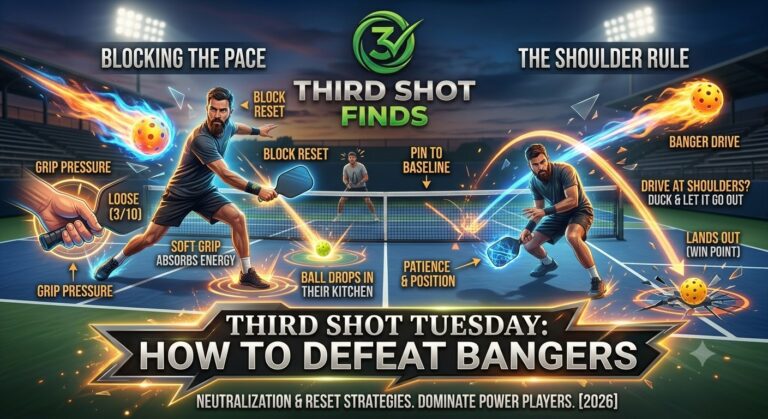
- The Aggressive Transition Zone Reset: You are caught in “no man’s land,” trying to make your way to the kitchen line. If the opponent attacks, don’t try to win the point with a powerful counter. Loosen your grip, block the ball, and guide it softly to their feet as they move forward. This resets the point and allows you to establish a low, defensive split-step as you advance.
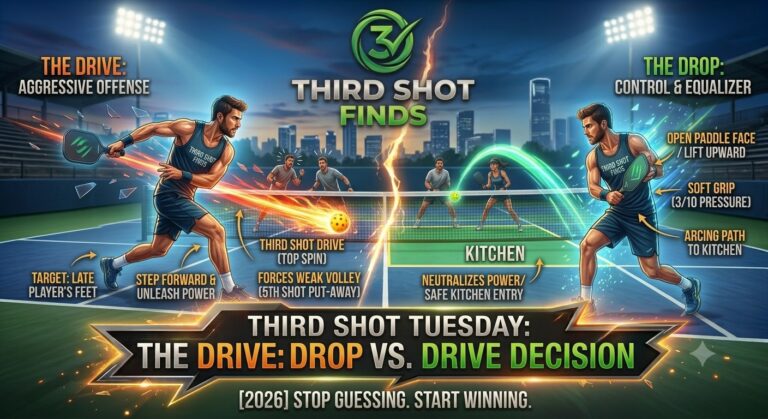
- The Aggressive Third-Shot Drive: If you choose to drive your third shot instead of dropping it, your primary goal is almost never to hit a clean winner. The goal is to hit a low, dipping ball that forces the opponent (standing at the net) to handle a volley at their knees. Their inevitable pop-up sets you or your partner up for an easy 5th shot drop or aggressive overhead.
- The Cross-Court Dink Battle: During standard dinking, the biggest mistake is hitting a defensive, high-arcing cross-court dink that sits up. The Deal Dinker strategy is to flatten out that cross-court ball slightly, targeting the outside foot of the opponent diagonal to you. This forces them to reach and adjust, often pulling them out of position and creating an opening down the middle.
3. Mechanics: How to Execute the Low Target
Targeting the feet is about precision, not power.
- Intent (Focus): Start by making a conscious decision before you swing. Do not just swing at the general direction of the opponent. Pick a specific shoe (right or left) and make that your bullseye.
- Topspin is Your Friend: To get a ball to drop sharply at someone’s feet, especially on a drive, you need topspin. Brush up the back of the ball from low to high. This forward rotation creates air pressure that forces the ball to dip rapidly after it crosses the net.
- Paddle Angle on Resets: When blocking a hard shot, angle your paddle face slightly downward toward their kitchen floor. A perfectly flat paddle will pop the ball up; a downward angle guides the ball to their shoelaces.
The Tape of the Tape: Target Matrix
| If you target the… | The Opponent’s Reaction… | The Expected Outcome |
| Chest / Shoulders | Comfortable, balanced volley | You get counter-attacked. |
| Hips / Waist | Minor adjustment | Neutral rally continues. |
| Shoelaces / Feet | Jammed, forced to lift | Weak pop-up or forced error. |
The Deal Dinker’s Final Take
The next time you are on the court and feel like your opponents are returning everything you throw at them, check your targets. Are you feeding them comfortable, waist-high balls?
Shift your eyes down. By intentionally targeting the feet, you strip your opponents of their power, force them into awkward anatomical positions, and dictate the pace of the point. Stop trying to hit through them, and start hitting under them.