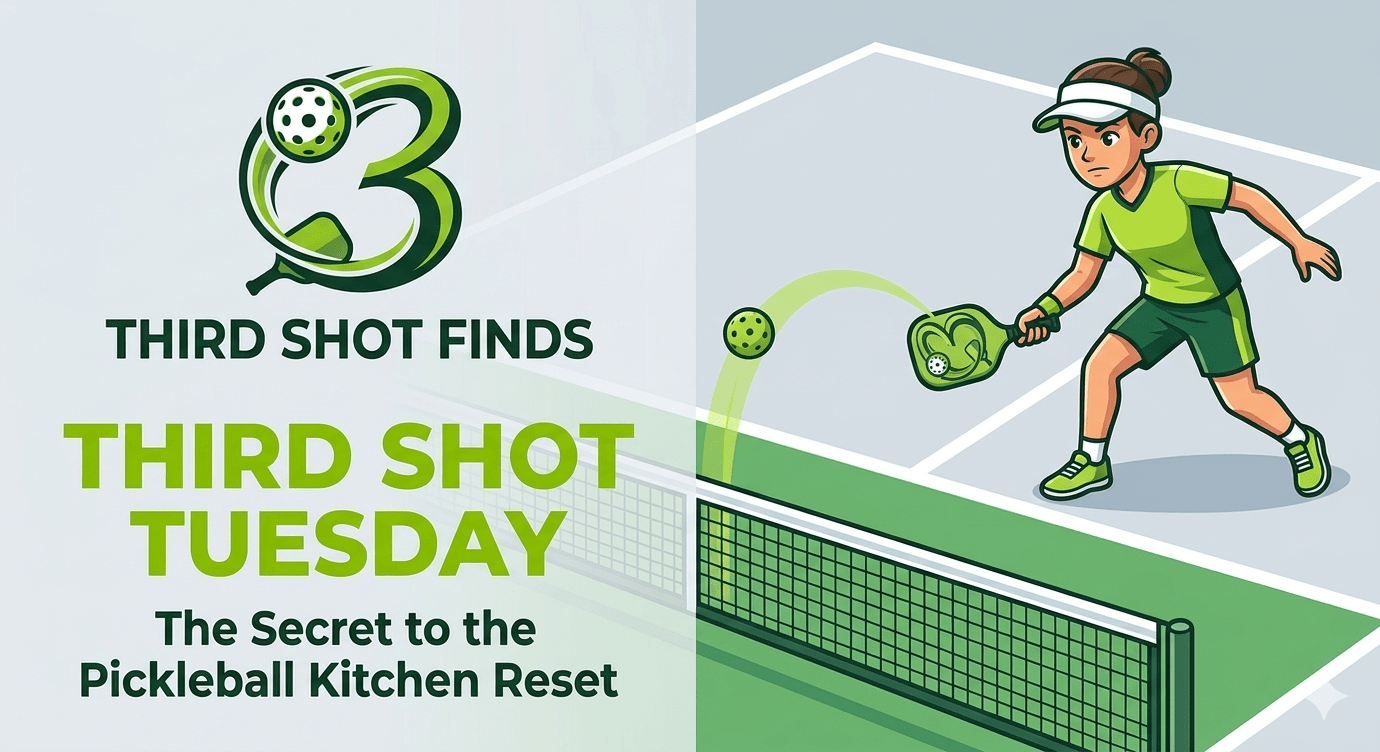
Third Shot Tuesday: The Secret to the Pickleball Kitchen Reset
THIRDSHOTFINDS.COM and The Deal Dinker are reader-supported. When you buy through links on our site, we may earn an affiliate commission at no extra cost to you.
Welcome back to Third Shot Tuesday, our weekly deep dive into the strategies that separate the 3.5 players from the 4.0 pros. This week, we are addressing the most terrifying moment in a pickleball match.
You hit a slightly high dink. The opponent’s eyes get wide. They take a massive backswing, and suddenly a neon green plastic ball is flying at your chest at 50 miles per hour. Your instinct is to swing back just as hard, starting a chaotic firefight that usually ends with you hitting the ball into the fence. Stop swinging. It is time to learn the pickleball kitchen reset. The Deal Dinker here. Let’s slow things down.
What is a Kitchen Reset?
A reset is exactly what it sounds like. It is a defensive block that takes the energy out of your opponent’s smash and drops the ball softly back into their kitchen.
When your opponent hits a hard drive, they are expecting you to either miss it or pop it back up for an even easier smash. By executing a reset, you completely neutralize their attack. You “reset” the point back to a slow, methodical dinking rally, effectively taking away their power advantage.
How to Execute the Perfect Reset
1. Soften Your Grip (The 3/10 Rule)
If you are holding your paddle in a “death grip” (a 10 out of 10 on the tightness scale), your paddle acts like a brick wall. When a fast ball hits a brick wall, it bounces off fast and far, meaning you will pop the ball up. To reset a fast ball, loosen your grip to a 3 out of 10. You want the paddle to feel slightly loose in your fingers. When the ball hits your paddle, the looseness will absorb the energy, causing the ball to drop softly.
2. The Paddle Angle
If a ball is flying at your chest, do not take a backswing. Hold your paddle directly in front of your body like a shield. Angle the face of the paddle slightly open (pointing up toward the sky). Let the ball hit the paddle; do not swing at the ball. The angle of the face combined with your loose grip will automatically pop the ball gently over the net.
3. Stop Backing Up
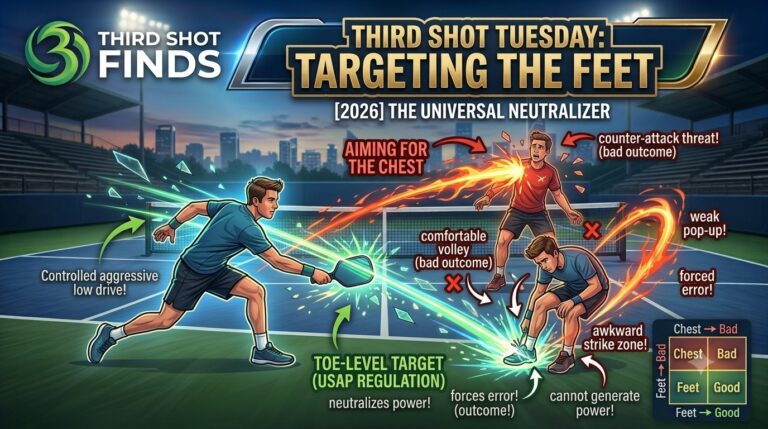
When players are scared of a hard drive, they naturally take two steps backward away from the kitchen line. This is a massive mistake. If you step back, you are exposing your feet, and the opponent will just hit the next ball right at your toes. Hold your ground right on the line, bend your knees, and trust your paddle shield.
The Deal Dinker’s Gear Tip
If you are constantly getting into fast-paced firefights at the net, your paddle weight might be slowing down your reaction time. Heavy paddles are great for power, but they are sluggish on defense. If you find yourself constantly late to block a smash, it might be time to look into a lightweight control paddle.
(If you missed last week’s strategy guide, be sure to read How to Master the Third Shot Drop!)