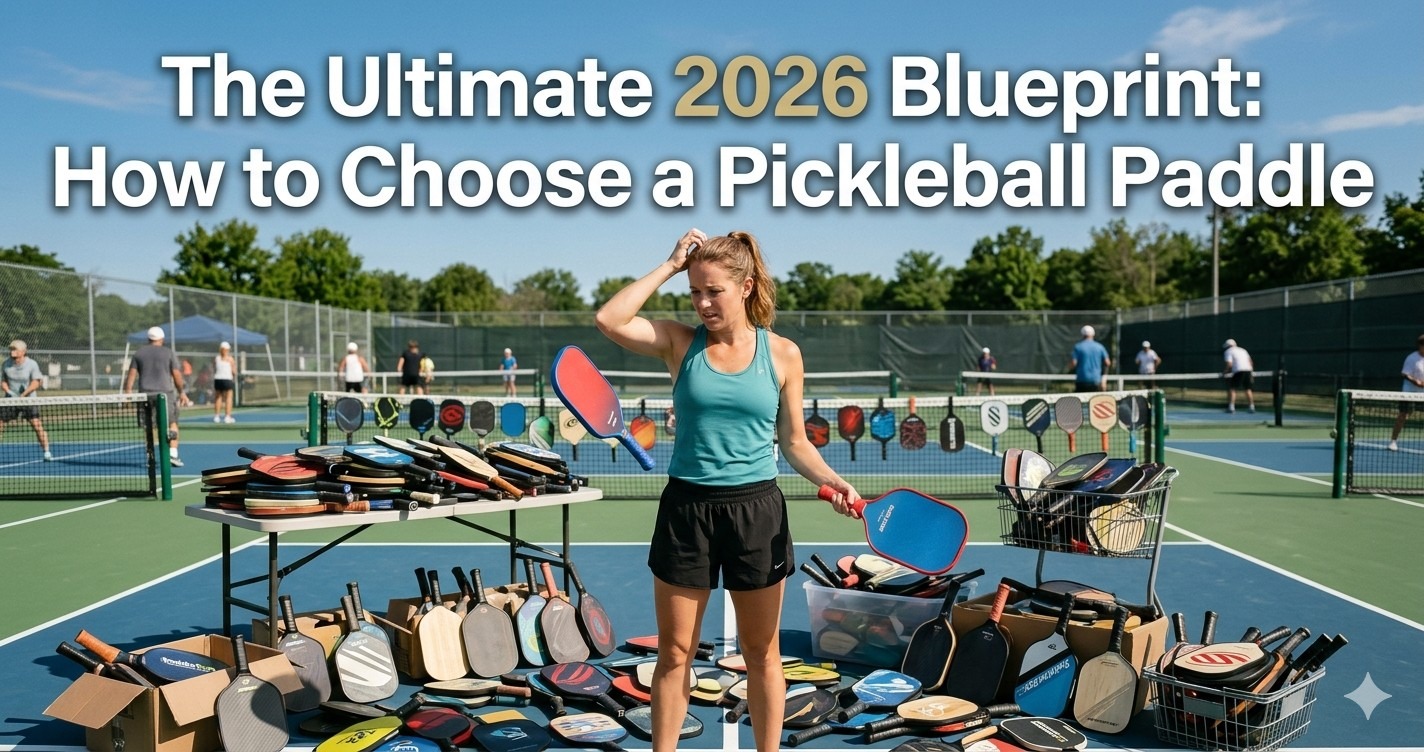
The Ultimate 2026 Blueprint: How to Choose a Pickleball Paddle
THIRDSHOTFINDS.COM and The Deal Dinker are reader-supported. When you buy through links on our site, we may earn an affiliate commission at no extra cost to you.
Today, we are taking a step back from the hyper-specific gear reviews to look at the big picture and answer the most common question in the sport: how to choose a pickleball paddle. If you are staring at a wall of paddles at your local pro shop or scrolling through hundreds of options online, it is easy to get completely overwhelmed. You are suddenly bombarded with terms like thermoformed, Toray T700, 16mm cores, and elongated handles. Buying the wrong paddle won’t just hurt your game; it can actually cause severe physical injuries like tennis elbow or rotator cuff strain. We are going to strip away all the marketing jargon and break down the four key components you actually need to care about so you can build your perfect weapon. Welcome back to the kitchen line. The Deal Dinker here.
1. Paddle Weight: The Most Important Decision
If you only pay attention to one specification when buying a paddle, make it the weight. Pickleball paddles generally range from 7.0 ounces to 8.5 ounces. While half an ounce sounds insignificant, it drastically changes the physics of your swing.
- Lightweight (7.0 oz – 7.4 oz): These are built for pure hand speed. If you love getting into rapid-fire volley battles at the kitchen line, a lighter paddle allows you to move your hands like lightning. However, you sacrifice baseline power. Check out our guide to the best lightweight paddles if you suffer from shoulder pain!
- Midweight (7.5 oz – 8.0 oz): This is the goldilocks zone for 80% of players. It provides a perfect blend of stability, power, and maneuverability.
- Heavyweight (8.1 oz – 8.5+ oz): Built for baseline bangers. A heavier paddle plows through the ball effortlessly, generating massive power. However, it will slow down your reaction time at the net and can quickly fatigue your arm.
2. Core Thickness: 14mm vs. 16mm
The core of your paddle acts like a mattress for the ball. The thickness of that core dictates whether your paddle is a “power” paddle or a “control” paddle.
- 14mm Cores (Power): A thinner core provides less cushioning. When the ball hits a 14mm face, it immediately violently ricochets off, generating massive speed and “pop.” These are great for aggressive singles players, but they are notoriously difficult to control during soft dink battles.
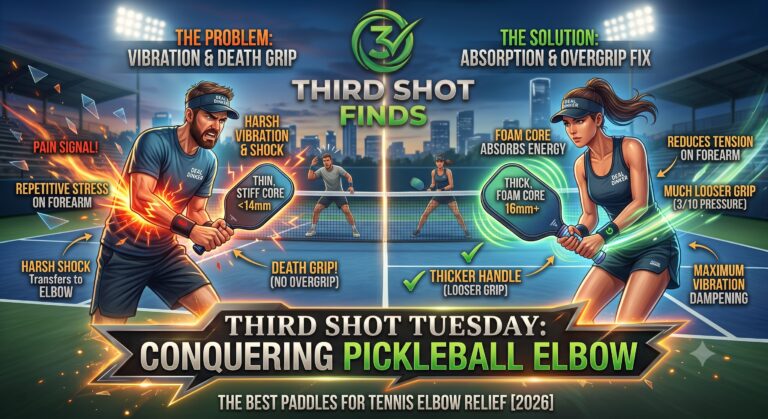
- 16mm Cores (Control): A thicker core absorbs the kinetic energy of the ball. It provides longer “dwell time,” meaning the ball stays on the paddle face a fraction of a second longer. This gives you unparalleled control for soft drops and resets. If you have arm issues, 16mm cores are highly recommended to absorb shock—see our tennis elbow paddle guide!
3. Paddle Shape: Standard vs. Elongated
The geometry of your paddle changes your reach and the location of your sweet spot. USA Pickleball strictly regulates the overall surface area, so you have to choose how you want that area distributed.
- Standard Shape (approx. 15.5″ x 8″): This gives you the widest possible face and the largest, most forgiving sweet spot. It is incredibly stable on mishits and perfect for beginners or players who prioritize defensive blocking.
- Elongated Shape (approx. 16.5″ x 7.5″): By making the paddle longer and narrower, you extend your reach and raise the sweet spot further away from your hand. This creates a whip-like leverage that generates huge power and spin. This is the absolute best shape for former tennis players looking to accommodate a two-handed backhand, or players with shorter arms looking for extra reach!
4. Face Material: Fiberglass vs. Raw Carbon Fiber
The surface material is the final piece of the puzzle, and it dictates how much friction you can generate.
- Fiberglass / Composite: This is a springy material that naturally generates more power. It is highly durable and very affordable, making it the premier choice for players looking to step up from a cheap starter set. Check out our favorite intermediate fiberglass paddle under $75!
- Raw Carbon Fiber (T700): This is the industry standard for pro-level play. The tightly woven carbon fibers act like sandpaper, aggressively gripping the plastic ball to generate diving topspin and slicing cuts. It is stiffer than fiberglass, offering more control at the expense of natural power.
Frequently Asked Questions
What is thermoforming?
Thermoforming is a manufacturing process where the entire paddle is sealed under extreme heat and foam is injected into the perimeter edges. It makes the paddle incredibly stiff, expands the sweet spot to the very edges, and generates massive power.
How often should I replace my paddle?
If you play 2-3 times a week with a raw carbon fiber paddle, the grit will begin to wear smooth after about 6 months of heavy play. Once you notice a severe drop in your spin generation, it is time to upgrade.
What if my community has noise restrictions?
The pickleball industry has recently developed a new “Quiet Category” of paddles specifically engineered to muffle the high-pitched popping sound. Read our full breakdown on quiet paddles for noise-restricted HOAs!
The Deal Dinker’s Final Verdict
There is no single “best” paddle in the world; there is only the best paddle for you. Assess your play style honestly. If you struggle with power, look for a 14mm fiberglass paddle. If you pop the ball up too high at the kitchen line, switch to a 16mm raw carbon fiber paddle to tame your touch. Build your paddle around your weaknesses, and you will instantly elevate your game.
Looking for other great reviews? Check out the Gear Vault!