The Best Pickleball Shoes for Plantar Fasciitis (Stop the Heel Pain) [2026]
THIRDSHOTFINDS.COM and The Deal Dinker are reader-supported. When you buy through links on our site, we may earn an affiliate commission at no extra cost to you.
(Disclaimer: I am a pickleball fanatic, not a doctor. This guide is based on player consensus, podiatrist recommendations, and gear testing. If you have chronic, severe pain, please consult a medical professional.)
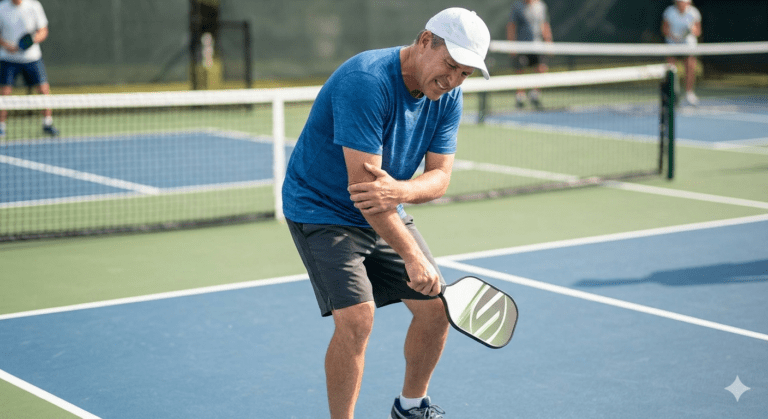
You wake up the morning after a great three-hour pickleball session. You swing your legs out of bed, put your feet on the floor, and take your first step. Instantly, a sharp, stabbing pain shoots right through the bottom of your heel. You hobble to the bathroom, wondering if your pickleball days are over.
Welcome to the club. You have Plantar Fasciitis, and it is the single most common injury in pickleball.
The good news? You do not have to quit playing. The bad news? Your current shoes are probably making it worse. Welcome back to the kitchen line. The Deal Dinker here. Today, we are breaking down exactly why the pickleball court is destroying your heels, and reviewing the best pickleball shoes for plantar fasciitis to get you playing pain-free.
1. Why Does Pickleball Cause Plantar Fasciitis?
Your plantar fascia is a thick band of tissue running across the bottom of your foot, connecting your heel bone to your toes. Its job is to act like a shock-absorbing bowstring for your foot’s arch.
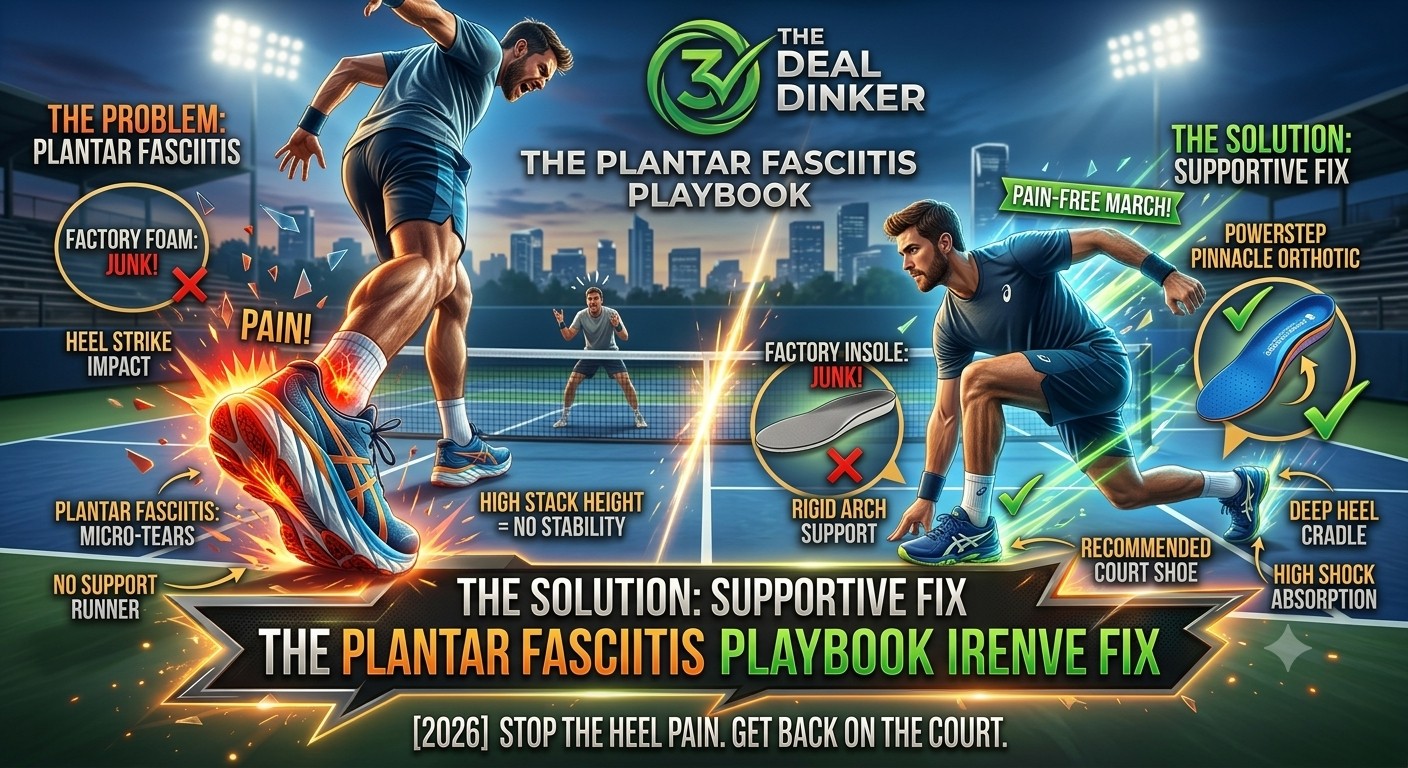
When you play pickleball, you are slamming your heel into rock-hard concrete thousands of times while wearing shoes with zero arch support. That “bowstring” gets stretched to its absolute limit, developing micro-tears and intense inflammation right where it connects to your heel.
To fix it, you need a shoe that does three things:
- High Shock Absorption: To soften the impact of a hard heel strike.
- High Torsional Rigidity: A stiff sole that won’t let your foot twist or flatten out.
- An Elevated Heel Drop: A heel that sits slightly higher than the toes to take the tension off the Achilles and the fascia.
2. The Deal Dinker’s Top Court Shoes for Heel Pain
If you are playing in flat, worn-out running shoes or canvas sneakers, stop immediately. You need maximum-cushion court shoes. Here are the top-rated models specifically praised by players battling PF:
- The Absolute Tank: K-Swiss Ultrashot 3 * Why it Wins: This is widely considered the king of shock absorption. The Ultrashot 3 features a highly rigid chassis (so your foot doesn’t bend the wrong way) combined with a massive, plush heel cushion. It is slightly heavier than other shoes, but it absorbs the shock of hard outdoor concrete better than almost anything else on the market.
- The Lightweight Savior: Asics Solution Speed FF 3 * Why it Wins: If the K-Swiss is too heavy for you, Asics provides the perfect alternative. They utilize their famous “GEL” technology directly in the heel to disperse shock while keeping the shoe incredibly light. It also features a built-in “Speedtruss” shank in the midfoot to keep your arch locked in place.
- The Budget/Wide Option: FitVille Amadeus
- Why it Wins: FitVille is quietly taking over the budget pickleball market. If you have wide feet and suffer from PF, these offer incredible toe-box room and a highly cushioned heel for under $70.
- ➡️ Click Here to view the FitVille Amadeus on Amazon
3. The #1 Pro Secret: Do Not Trust Factory Insoles
Here is the hard truth that shoe companies do not want you to know: No matter how much you spend on a pickleball shoe, the factory insole inside of it is a 50-cent piece of useless foam. If you have Plantar Fasciitis, buying a new shoe is only 50% of the solution. The other 50% is throwing the factory insole in the trash and replacing it with a medical-grade orthotic insert. You need a rigid arch support to physically prevent your plantar fascia from stretching when you step down.
- The Deal Dinker’s Fix: The PowerStep Pinnacle insole. This is the gold standard recommended by podiatrists and players alike. It features a rigid, encapsulated arch shell and a deep heel cradle. Slip these into your new K-Swiss or Asics shoes, and you will feel instant, structural relief.
➡️ Click Here to view PowerStep Pinnacle Insoles on Amazon
The Deal Dinker’s Final Take
Plantar Fasciitis is a stubborn injury, but it is entirely manageable. Take a few days off, ice your heel, and stop playing in flat, unsupportive shoes. Upgrade to a rigid, highly-cushioned court shoe like the K-Swiss Ultrashot 3, rip out the factory foam, and drop in a PowerStep insole. Your feet (and your pickleball partner) will thank you.
Frequently Asked Questions: Pickleball Footwear
Can I use running shoes for pickleball if they have good cushion?
No! Highly cushioned running shoes (like Hokas or Brooks) are great for walking, but they have zero lateral support. If you wear them on a pickleball court, their high stack height combined with soft mesh walls makes them a massive ankle-roll hazard when you move side-to-side.
How often should I replace my pickleball shoes?
Even if the outside of the shoe looks fine, the internal foam cushioning compresses and dies after about 40 to 60 hours of intense court play. If you play three times a week, you should be replacing your shoes every 4 to 5 months to ensure your joints remain protected.