Third Shot Tuesday: The Best Pickleball Paddles for Tennis Elbow [2026]
THIRDSHOTFINDS.COM and The Deal Dinker are reader-supported. When you buy through links on our site, we may earn an affiliate commission at no extra cost to you.
(Disclaimer: I am a pickleball fanatic, not a doctor. This guide is based on equipment science and player consensus. If you have chronic, sharp pain, please consult a medical professional.)
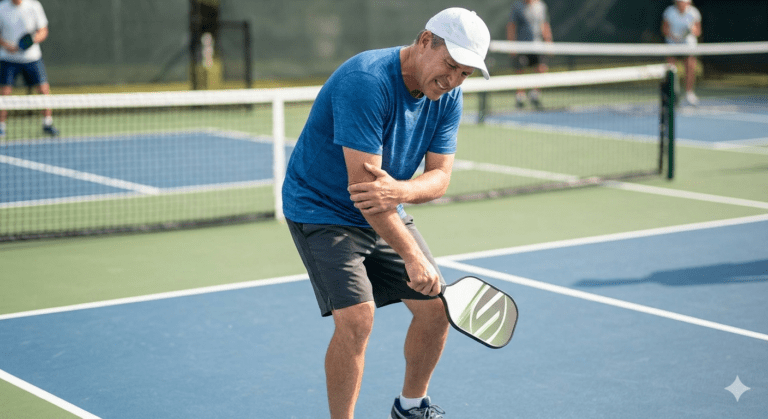
You hit a slightly off-center backhand drive, and suddenly a sharp, burning pain shoots from the outside of your elbow straight down your forearm. You shake it out, but by the end of the match, you can barely grip your water bottle.
You have lateral epicondylitis, commonly known as tennis elbow (or pickleball elbow).
It is one of the most frustrating injuries in racket sports because it forces you off the court. But before you start icing your arm and researching physical therapy, you need to look closely at the weapon in your hand. Your paddle is likely the primary culprit. Welcome back to the kitchen line for another Third Shot Tuesday. The Deal Dinker here. Today, we are diagnosing the physics of arm pain and reviewing the absolute best pickleball paddles for tennis elbow.
1. The Physics of Pickleball Elbow
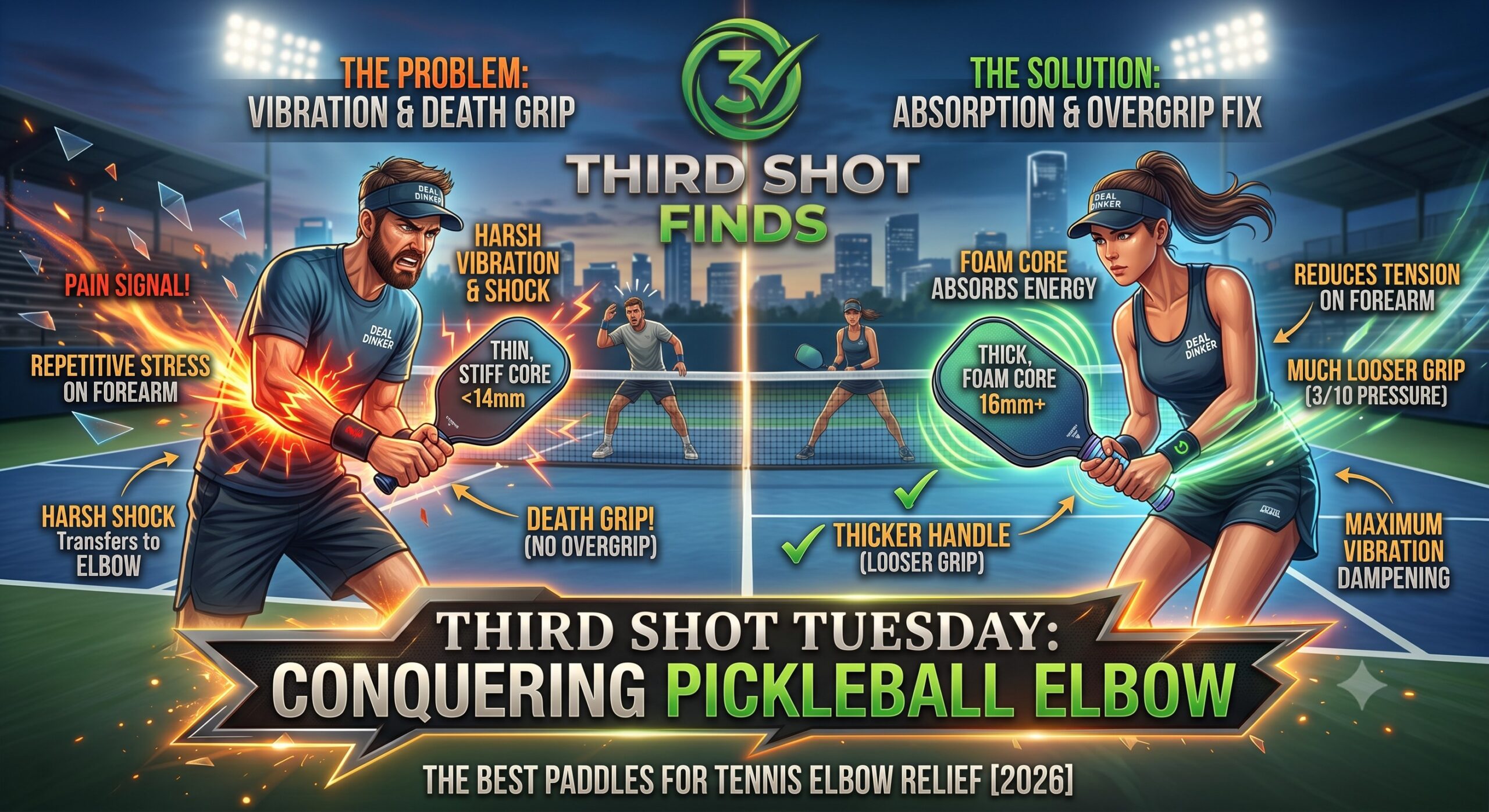
Pickleball elbow is caused by repetitive stress and vibration. When a plastic ball strikes a hard carbon-fiber surface, it sends a high-frequency shockwave down the paddle shaft, into your hand, and directly into the tendons of your elbow.
If you are currently playing with a thin (14mm or under), stiff, high-pop power paddle, your arm is absorbing 100% of that shock every time you swing. To fix this, you need a paddle that acts as a shock absorber. You are looking for three specific features:
- Thick Cores (16mm+): Thicker cores compress upon impact, slowing down the ball and absorbing the harsh energy before it reaches your arm.
- Foam-Injected Tech: Modern Gen 4 paddles use injected foam (EVA or EPP) around the edges or throughout the core to physically mute vibrations.
- Low Swing Weight: A paddle that is too heavy at the top (head-heavy) forces your forearm tendons to work overtime just to keep the paddle stable during a swing.
2. The Deal Dinker’s Top Paddles for Tennis Elbow Relief
If you want to stay on the court, you need to trade raw, stiff power for plush, vibration-dampening control. Here are the top paddles proven to save your joints:
- The Medical Standard: ProKennex Kinetic Series
- Why it Wins: ProKennex paddles are literally engineered for players with tennis elbow. They feature patented “Kinetic Technology”—tiny tungsten beads housed in chambers around the paddle face. When you swing, these beads absorb the kinetic energy of the ball impact, reducing vibration by up to 43%. If you have severe elbow pain, this is the gold standard.
- ➡️ Click Here to view ProKennex Paddles on Amazon
- The Foam-Core Savior: CRBN 1 TruFoam Genesis
- Why it Wins: CRBN recently introduced “TruFoam” technology, replacing standard rigid honeycomb cores with a foam-injected polymer. The result is an incredibly muted, soft thud on impact rather than a harsh crack. It absorbs shock brilliantly while still offering enough pop for aggressive play.
- ➡️ Click Here to view the CRBN 1 TruFoam on Amazon
- The Plush Control King: Selkirk LUXX Control Air
- Why it Wins: At a massive 20mm thick, the LUXX is essentially a pillow on a stick. It has an incredibly low swing weight and a massive sweet spot. Off-center hits (which cause the most painful vibrations) are effortlessly smoothed out by the thick core.
- ➡️ Click Here to view the Selkirk LUXX on Amazon
3. The #1 Pro Secret: Check Your Grip Size
Buying a new paddle will not cure your elbow if you are making this one critical mistake: playing with a grip that is too small.
If your paddle handle is too skinny, your brain instinctively forces your hand to squeeze it tighter to keep it from twisting when you hit the ball. This “death grip” puts your forearm tendons under constant, agonizing tension.
- The Fix: Your grip should be thick enough that when you hold the paddle, your ring finger does not quite touch the heel of your thumb. If it does, you need to buy a pack of tacky overgrips and wrap your handle until it feels substantial. A thicker handle allows for a looser grip, which instantly relieves tension on your elbow.
The Tape of the Tape: Paddle Specs & Arm Pain
| Paddle Spec | Effect on Your Elbow | The Deal Dinker’s Recommendation |
| 14mm Core | High Vibration (Harsh) | Avoid during flare-ups |
| 16mm+ Core | Low Vibration (Plush) | Highly Recommended |
| High Swing Weight | High Tendon Strain | Avoid if experiencing pain |
| Injected Foam Core | Maximum Shock Absorption | The Modern Standard for Relief |
The Deal Dinker’s Final Take
Do not try to play through the pain of tennis elbow; you will only make it worse. Rest your arm, do your stretches, and evaluate your gear.
If you are swinging a stiff, thin paddle with a tiny grip, you are actively working against your body. Upgrade to a plush, 16mm foam-core paddle like the CRBN 1 TruFoam or a vibration-killing ProKennex, wrap that handle with a fresh overgrip, and focus on letting the paddle do the work.