Why Does My Arm Hurt? The Ultimate Gear Guide to Pickleball Tennis Elbow [2026]
Welcome back to the kitchen line. The Deal Dinker here.
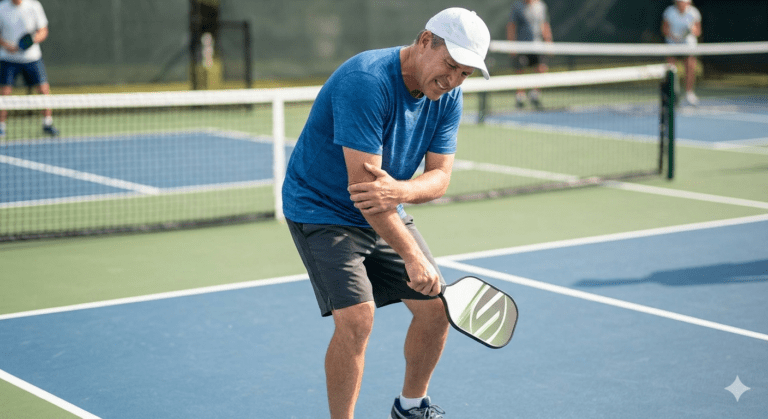
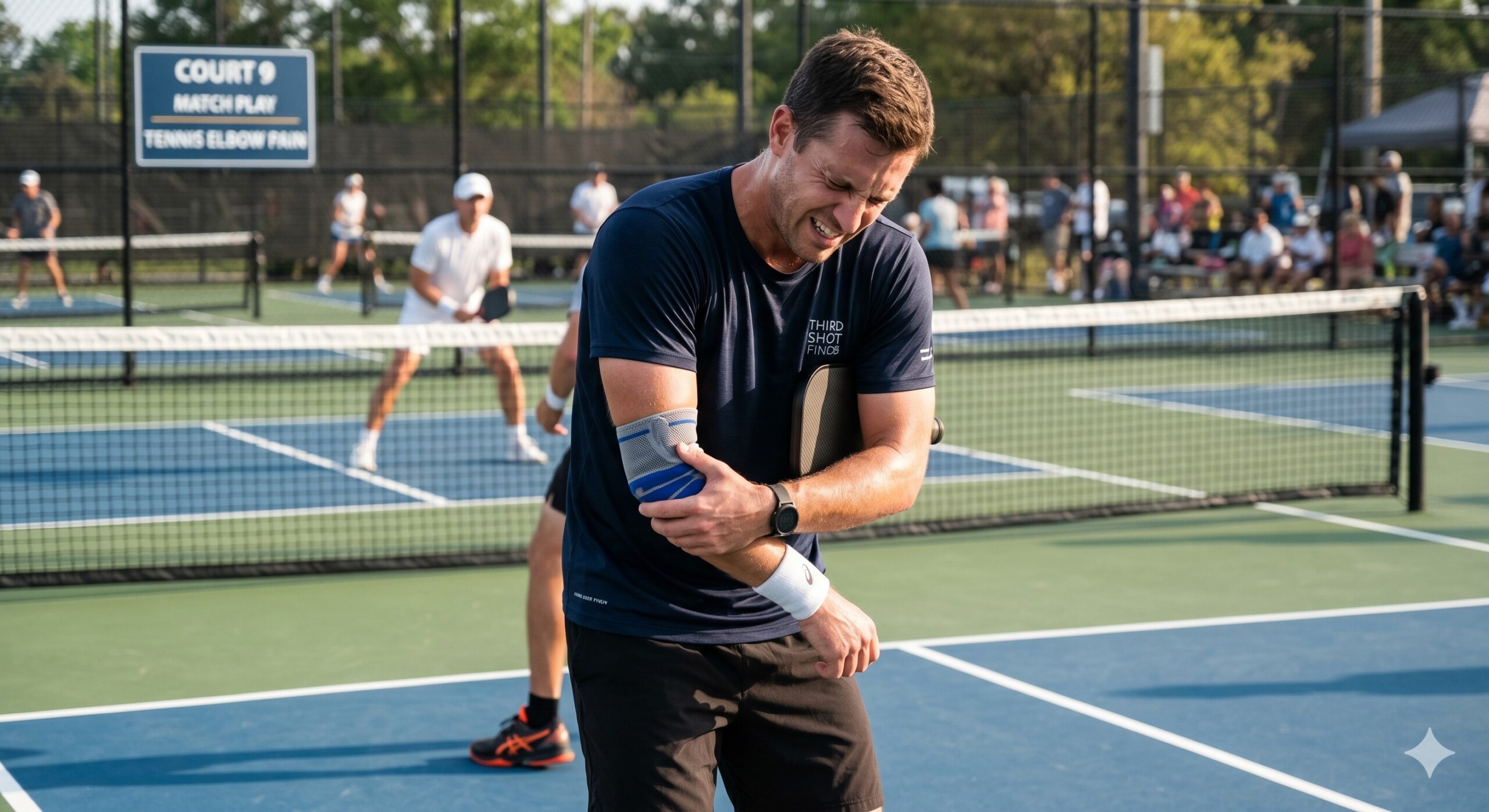
Let’s address the elephant on the court. You have been playing four times a week, your dinks are finally getting sharp, and your drives are staying low. But recently, every time you try to hit a backhand, a sharp, burning pain shoots from your elbow down into your forearm.
Congratulations, you have Lateral Epicondylitis, universally known as “Tennis Elbow” (or in our case, Pickleball Elbow).
Disclaimer: I am a gear expert, not a doctor. If your arm is falling off, go see a physical therapist. However, as a gear fanatic, I can tell you exactly why this is happening to you. In 90% of cases, your arm isn’t the problem—your paddle is the problem. Today, we are breaking down the exact equipment flaws that cause pickleball elbow, and the gear you need to buy to fix it.
Reason 1: Your Paddle is Too Light
It sounds backwards, right? Shouldn’t a heavy paddle hurt your arm more? False.
When you play with an ultra-light paddle (under 7.5 ounces), there is no mass to absorb the impact of the ball. When a banger hits a 50mph drive at you and you try to block it with a feather-light paddle, the shockwaves travel directly through the paddle, down the handle, and explode right into your elbow tendons.
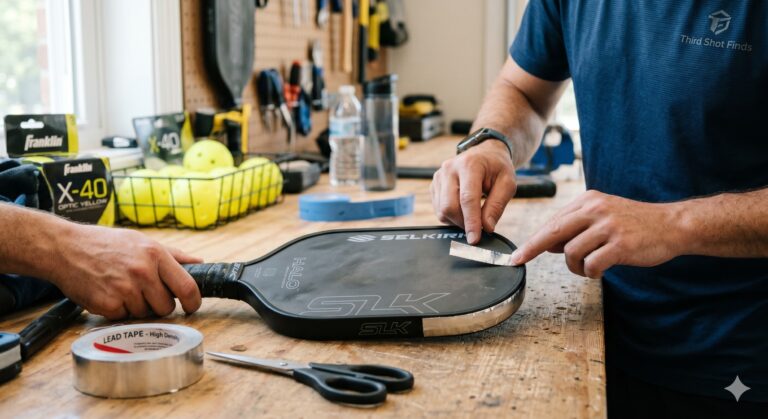
- The Gear Fix: You need to add mass to absorb the shock. If you don’t want to buy a new paddle, read our guide on The 3 Cheap Upgrades That Will Instantly Transform Your Pickleball Paddle and put lead tape on the throat of your paddle. This instantly increases stability and absorbs vibration before it hits your arm.
Reason 2: Your Grip is Too Small
If your paddle handle is too skinny for your hand, your fingers have to squeeze incredibly hard just to keep the paddle from twisting when you hit the ball. This constant, vice-like “death grip” strains the extensor muscles in your forearm, leading directly to tendon inflammation.
- The Gear Fix: You need to increase your grip circumference so your hand can relax. Wrap a premium, shock-absorbing overgrip (like Tourna Grip or Yonex Super Grap) directly over your factory grip. It provides cushion and widens the handle, forcing you to hold the paddle looser.
Reason 3: You Have a “Dead” Core
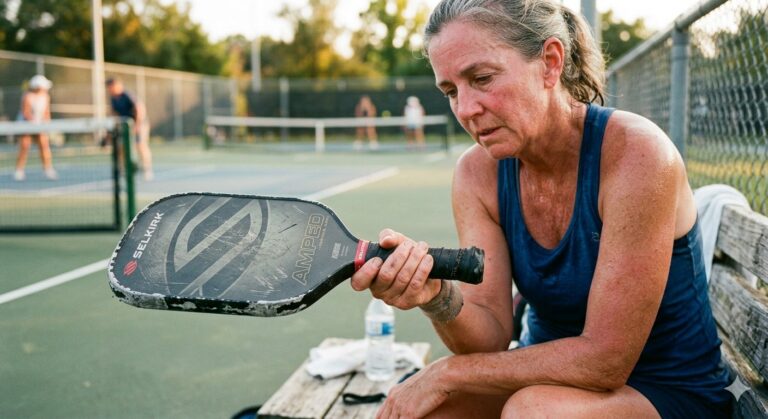
If you are playing with a cheap, $30 wooden paddle or a 2-year-old fiberglass paddle with a crushed honeycomb core, your gear has absolutely zero vibration dampening.
- The Gear Fix: It is time to upgrade to a 16mm thick core. Paddles with 16mm polymer cores (like the Vatic Pro Prism Flash) are significantly thicker and plush. They act like a mattress, swallowing the kinetic energy of the ball. Look for paddles that advertise “Edge Foam Injection,” which is a specific manufacturing technique that lines the perimeter of the paddle with dense foam specifically to kill arm-destroying vibrations.
Frequently Asked Questions
Can a light pickleball paddle cause tennis elbow?
Yes, a pickleball paddle that is too light can cause tennis elbow. Lightweight paddles lack the mass required to absorb the kinetic shock of a fast-moving ball. Because the paddle cannot absorb the impact, those harsh vibrations travel directly down the handle and into your forearm tendons.
Does a heavier pickleball paddle help with tennis elbow?
No, a paddle that is too heavy can actually cause tennis elbow by overworking your forearm muscles. However, a paddle that is too light transfers too much vibration. Aim for a midweight paddle around 7.8 to 8.2 ounces.
Does grip size affect pickleball elbow?
Yes, grip size drastically affects pickleball elbow. If your paddle handle is too small, you are forced to over-grip and squeeze the paddle tightly to maintain control. This constant tension strains your forearm muscles. Adding an overgrip widens the handle and allows for a relaxed, pain-free swing.
What is the best pickleball paddle thickness for tennis elbow?
The best pickleball paddle thickness for preventing tennis elbow is 16mm. Thicker 16mm polymer honeycomb cores offer vastly superior vibration dampening and shock absorption compared to thinner 14mm or 12mm cores, greatly reducing the stress placed on your elbow joints.